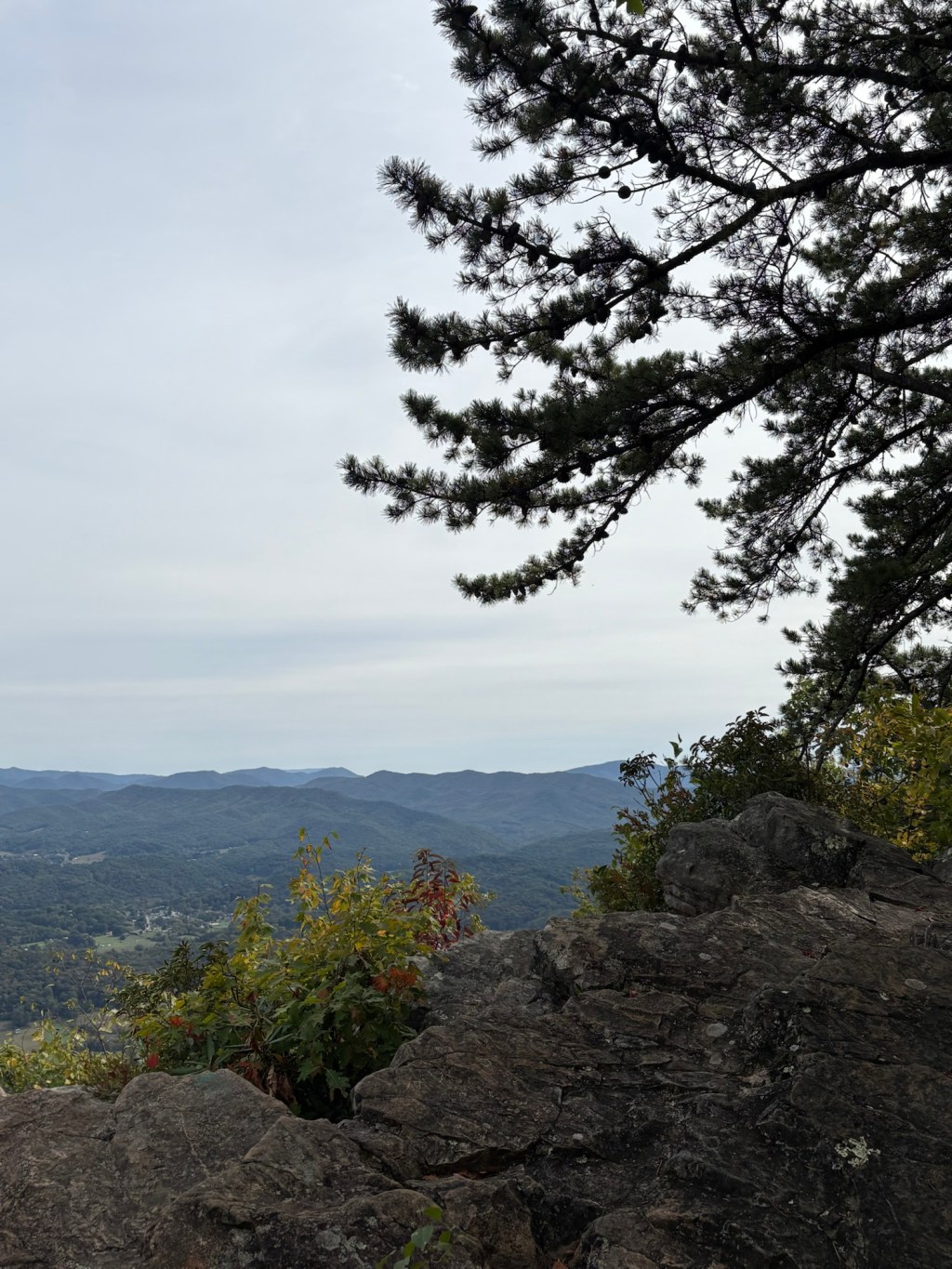
A few weeks ago, one of my sons and I had the privilege of hiking on a trip with some dear friends. The fall Tennessee air was crisp, subtle color was popping from some trees, and we were excited to indulge in an activity we don’t get to do as much as we’d like.
I’m in pretty good shape thanks to consistent exercise, but I quickly realized that some of my muscles (mostly my calves) were not happy with this different activity. It was as if they were screaming, “What are you doing to us?! We’re on fire!!!” Because we were with a group and it was just so much fun, I ignored their pleas for rest and continued the ascent.
Plus, I knew that rest was coming.
Once we reached the pinnacle of the trail, we gave our (or just my) tired muscles a break. Come to think of it, I didn’t actually sit for long, but even removing my pack and taking in the view was enough rest to allow me to make the descent (after a few wrong turns! Ha! Bonus distance!)
Hebrews chapter four presents a rest that’s about more than giving our muscles a rest after a difficult hike. The author tells us of the rest God offered to His people in the past, a rest offered in the present, and a future rest that we who believe have to look forward to. It’s not an excuse for inactivity, but rather a rest in His completed work.
As a reminder, I’m looking at a doctrine seen in each chapter(ish) of the book of Hebrews, a sermon-like letter written to encourage and exhort discouraged Christians (likely Jewish Christians) in the face of hardship and persecution. What we believe influences how we endure. These posts are a small sampling of things that could be said about each topic.
Chapter 4: God’s Rest
Hebrews 4:8-11 For if Joshua had given them rest, God would not have spoken later about another day. Therefore, a Sabbath rest remains for God’s people. For the person who has entered his rest has rested from his own works, just as God did from his. Let us, then, make every effort to enter that rest, so that no one will fall into the same pattern of disobedience.
There are 11 references to “rest” in Hebrews 4 in the CSB. Clearly this is something the author wants to remind his audience of!
Before we look at God’s rest past, present, and future, note that God Himself sets the example of rest. It’s not from exhaustion, but rather from His completion. (Heb. 4:4, 11). After day six when God created man and woman (and all the other things before them and for them!), He rested. I was listening to a sermon on Hebrews 4, and had never considered this obvious but helpful observation: Adam and Eve’s first full day of life was the day that God rested.
What a picture of life beginning with enjoying God’s abundant provisions! It’s a pattern we continue to see: rest doesn’t come as a result of our striving, but because of what He has provided and accomplished for us.
It reminds us that rest is also offered by God for His people.
Past: Promised rest for Israel (4:6-8)
As we explored last week, the author reminds the Hebrews of the rest refused by their ancestors of the wilderness generation. He warns them not to repeat history, hardening their hearts to unbelief. Israel entered the promised land under the leadership of Joshua, but the rest they experienced was still not final. It pointed forward to further rest yet to be fulfilled.
Present: Promised rest through faith (4:2-3, 9-10)
The author writes that “the promise to enter his rest remains.” He goes on to remind them the key to entering that rest: belief. “For we who have believed enter the rest…” The invitation to God’s rest finds security in the finished work of Christ. It’s not a cessation from doing work, but a trust in what He’s accomplished as we walk in faithful obedience.
Future: Promised rest in the new heavens and new earth
This isn’t fully explained in Hebrews 4, but looking ahead, in Revelation 21:1-5 we can see a future rest that is still to be fulfilled! “…Look, God’s dwelling is with humanity, and he will live with them. They will be his peoples, and God himself will be with them and will be their God.” (Rev. 21:3)
Why did understanding God’s rest matter to these Christians?
As these suffering Christians are called to endurance, they are reminded that their rest won’t ultimately be from immediate relief and circumstantial change. Their hope could rest in the certainty of something better: God’s promises. They are motivated to endure because their rest was secured in Christ and is still yet to come in its fullness. No matter how bad their circumstances got, nothing could alter God’s promises of a future rest. Additionally, they were being warned not to follow the path of their ancestors who failed to enter God’s rest because of unbelief.
Why does understanding God’s rest matter for us today?
- Even when we are trusting God by faith, we should not expect that our rest will come from circumstantial change. Cancer may still take the life of a loved one. Marriages may still fall apart. Natural disasters may still demolish communities. Though trials will continue to roll in like ocean waves, we have an ultimate and final rest to look forward to. (Rev. 21:1-5)
- Our rest will never come through doing “enough” to serve God. I love this note in my Spurgeon Study Bible commenting on Hebrews 4:3: “We ought to pant after sanctification; we ought to be crying and sighing every day after conformity to Christ. But it is neither in our sanctification nor in our conformity that we find our rest. Our rest comes to us through believing in Jesus Christ.”- Charles H. Spurgeon
Though I knew I’d experience rest at the top of our hiking excursion, it didn’t eliminate the burning of my calf muscles in the journey up the mountain! In the same way, as we persevere by faith, life won’t always be easy, but we have a security in the finished work of Christ on our behalf, and we have a future rest still to be fulfilled. And it’ll be worth the wait.
Click here for the entire Hebrews series.








Leave a Reply